



Histamine Receptor
Histamine Receptors are a class of G protein-coupled receptors with histamine as their endogenous ligand. There are four known histamine receptors: H1 receptor, H2 receptor, H3 receptor, H4 receptor. The H1 receptor is a histamine receptor belonging to the family of Rhodopsin-like G-protein-coupled receptors. This receptor, which is activated by the biogenic amine histamine, is expressed throughout the body, to be specific, in smooth muscles, on vascular endothelial cells, in the heart, and in the central nervous system. H2 receptors are positively coupled to adenylate cyclase via Gs. It is a potent stimulant of cAMP production, which leads to activation of Protein Kinase A. Histamine H3 receptors are expressed in the central nervous system and to a lesser extent the peripheral nervous system, where they act asautoreceptors in presynaptic histaminergic neurons, and also control histamine turnover by feedback inhibition of histamine synthesis and release. The Histamine H4 receptor has been shown to be involved in mediating eosinophil shape change and mast cell chemotaxis.
Histamine Receptor Isoform Specific Products
All Product Categories
-
Histamine Receptor Inhibitors
(197)
View all products
-
Histamine Receptor Agonists
(66)
View all products
-
Histamine Receptor Antagonists
(495)
View all products
-
Histamine Receptor Activators
(5)
View all products
-
Histamine Receptor Modulators
(20)
View all products
-
Histamine Receptor Controls
(9)
View all products
-
Histamine Receptor Ligands
(2)
View all products
-
Histamine Receptor Related Products (860)
Related Products (860)

-
Antibodies (2)
-
Histamine Receptor Isoform Comparison
-
Levocabastine
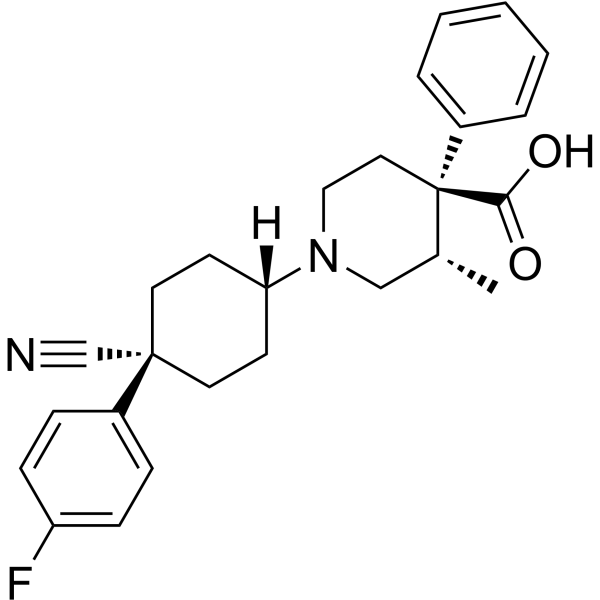 0 ImagesCat. No.: HY-14277CAS No.: 79516-68-0Synonyms: R 50547Levocabastine (R 50547) is a potent and selective histamine H1-receptor antagonist. Levocabastine hydrochloride is also a selective, high affinity neurotensin receptor subtype 2 (NTR2) antagonist, with a Ki of 17 nM for mNTR2. Levocabastine can act as a VLA-4 antagonist, interferes with conjunctival eosinophil infiltration in allergic conjunctivitis (AC).
-
Cipralisant maleate
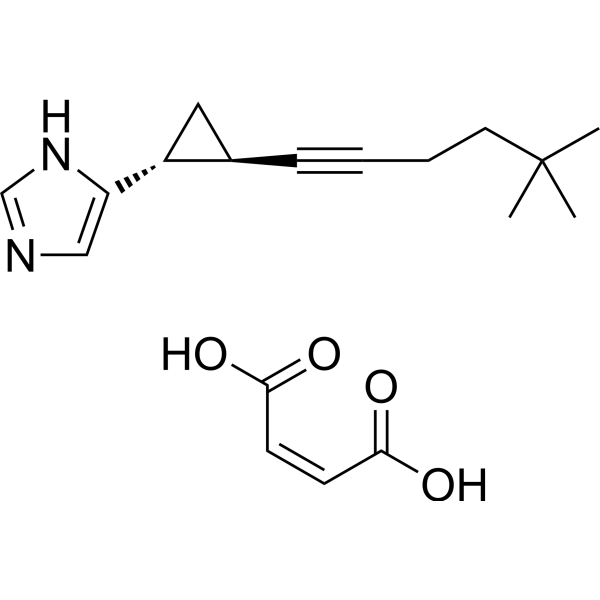 0 ImagesSynonyms: GT-2331 maleateCipralisant (GT-2331) (maleate) is an orally active, low-toxicity, potent, selective, high affinity histamine H3 receptor full antagonist in vivo, and an agonist in vitro, with a pKi of 9.9 for histamine H3 receptor and a Ki of 0.47 nM for rat histamine H3 receptor. Cipralisant (maleate) has the potential for attention-deficit hyperactivity disorder research. Cipralisant (maleate) is a click chemistry reagent, it contains an Alkyne group and can undergo copper-catalyzed azide-alkyne cycloaddition (CuAAc) with molecules containing Azide groups.
-
Mirtazapine-d4 hydrochloride
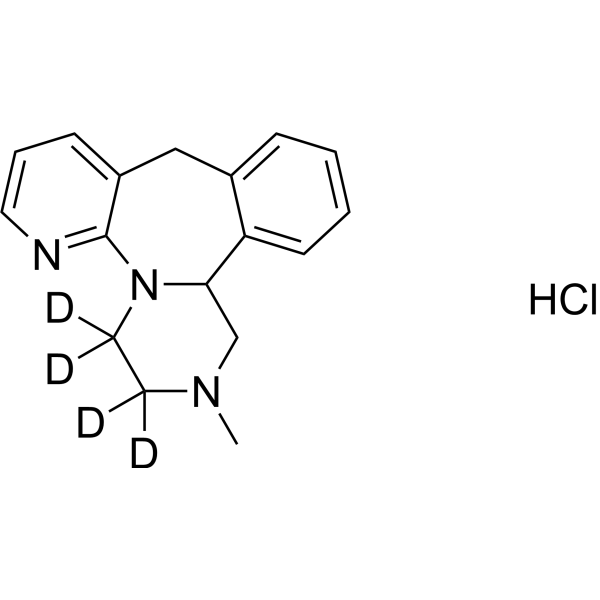 0 ImagesCat. No.: HY-B0352S3CAS No.: 1215587-73-7Mirtazapine-d4 hydrochloride is deuterated labeled Mirtazapine (HY-B0352). Mirtazapine (Org3770) is a potent and orally active noradrenergic and specific serotonergic antidepressant (NaSSA) agent. Mirtazapine is also a 5-HT2, 5-HT3, histamine H1 receptor and α2-adrenoceptor antagonist with pKi values of 8.05, 8.1, 9.3 and 6.95, respectively.
-
Pheniramine maleate (Standard)
 0 ImagesSynonyms: Prophenpyridamine maleate (Standard); Tripoton maleate (Standard); Pheniramine maleate (Standard)Pheniramine (maleate) (Standard) is the analytical standard of Pheniramine (maleate). This product is intended for research and analytical applications. Pheniramine (Prophenpyridamine; Tripoton) maleate is a first-generation histamine H1 receptor antagonist, acts on the central nervous system (CNS) with sedative and hypnotic effect. Pheniramine maleate displays antitumor effect and induces leukemia cells apoptosis. Pheniramine maleate is also a safe and effective local agent that can suppress or relieve pain, with antipruritic effects.
-
Cassiaside C2
 0 ImagesCat. No.: HY-N15704CAS No.: 218155-49-8Cassiaside C2 is a naphthopyrone with a strong antiallergic activity. Cassiaside C2 inhibits the histamine release from rat peritoneal exudate mast cells induced by antigen-antibody reaction.
-
σ1R/H3R ligand-1
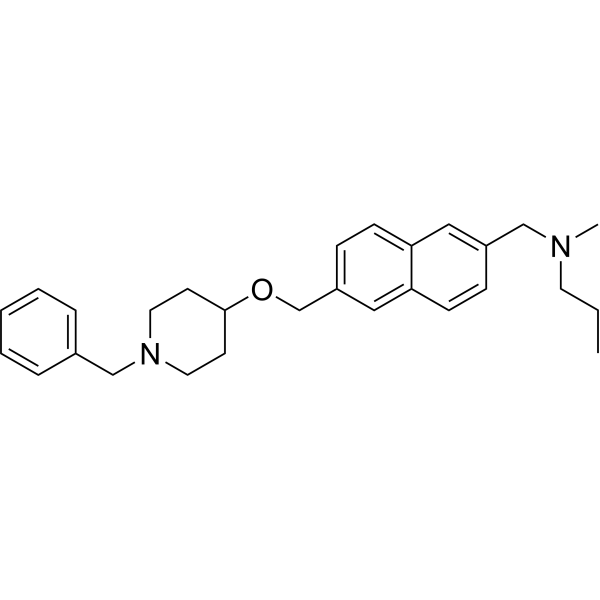
 0 ImagesCat. No.: HY-181722σ1R/H3R ligand-1 is a dual σ1R/H3R antagonist with a σ1R Ki of 8.8 nM and an H3R Ki of 31.2 nM. Through the dual action of simultaneously antagonizing σ1R and H3R, σ1R/H3R ligand-1 exhibits potent dose-dependent analgesic activity in mouse models of visceral pain and neuropathic pain. σ1R/H3R ligand-1 can be used for the research of visceral pain and neuropathic pain.
-
AZD3778
 0 ImagesCat. No.: HY-182439CAS No.: 485391-80-8AZD3778 (Compound 8) is an inhibitor of CCR3 and histamine H1 receptor (histamine H1 receptor), with IC50 values of 8.1 nM and 40 nM, respectively. AZD3778 inhibits the binding of eosinophil chemokines to CCR3, as well as the binding of histamine to histamine H1 receptor. AZD3778 exhibits anti-eosinophilic activity. AZD3778 alleviates symptoms associated with allergic rhinitis. AZD3778 can be used in research related to allergic rhinitis and asthma.
-
Methdilazine hydrochloride (Standard)
 0 ImagesCat. No.: HY-B1690ARCAS No.: 1229-35-2Thioridazine (Standard) is the analytical standard of Thioridazine. This product is intended for research and analytical applications. Thioridazine, an antagonist of the dopamine receptor D2 family proteins, exhibits potent anti-psychotic and anti-anxiety activities. Thioridazine is also a potent inhibitor of PI3K-Akt-mTOR signaling pathways with anti-angiogenic effect. Thioridazine shows antiproliferative and apoptosis induction effects in various types of cancer cells, with specificity on targeting cancer stem cells (CSCs).

-
Pirolate
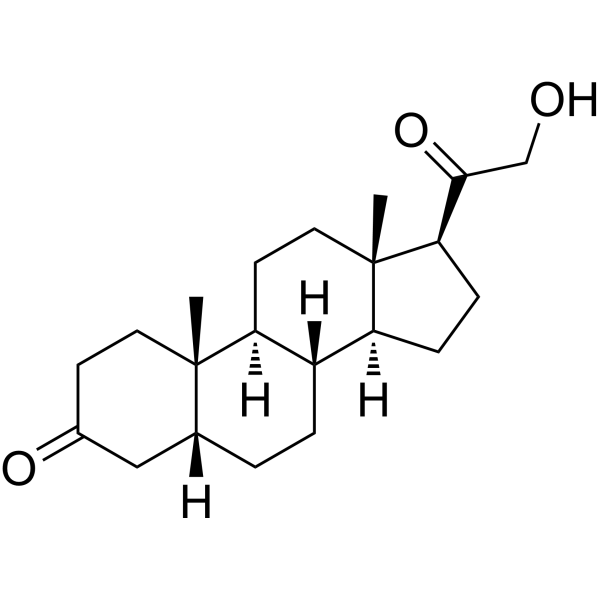
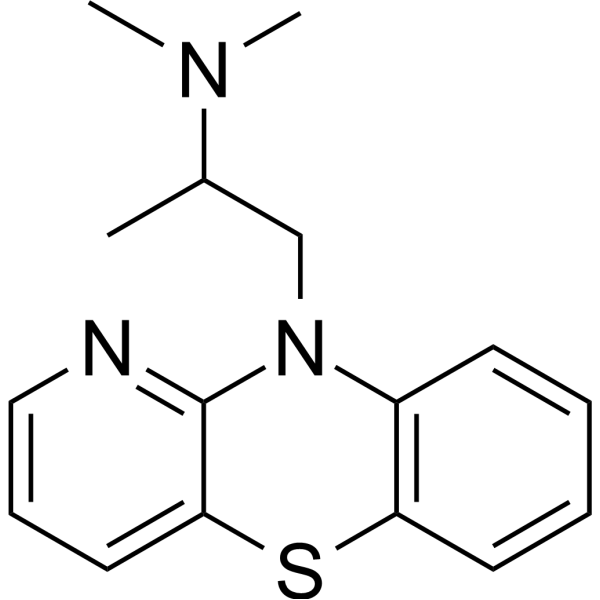
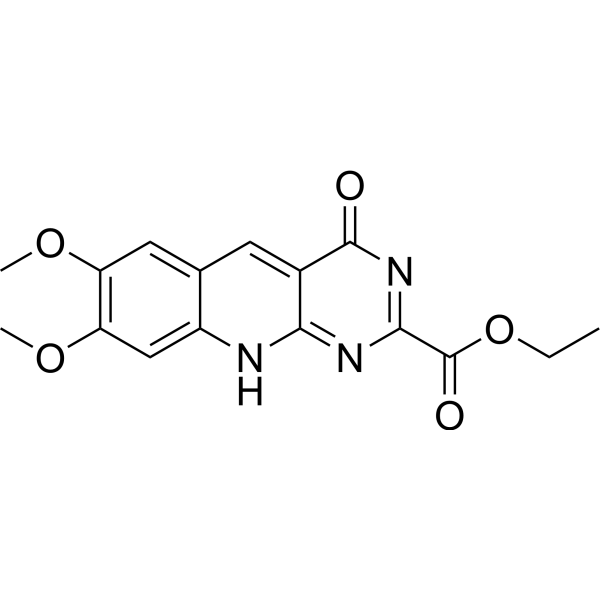 0 ImagesCat. No.: HY-100280CAS No.: 55149-05-8Synonyms: CP-32387Pirolate is a histamine H1 receptor antagonist.
-
Lafutidine-d10
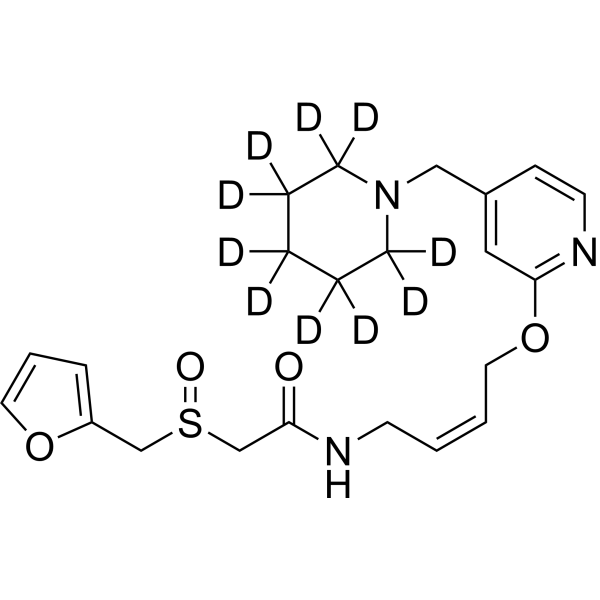 0 ImagesCat. No.: HY-B0160SCAS No.: 1795136-26-3Lafutidine-d10 is deuterium labeled Lafutidine. Lafutidine (FRG-8813) is a histamine H2-receptor antagonist (H2RA), with proven gastric mucosal protective effects. Lafutidine can be used for the research of gastroesophageal reflux disease.
-
JNJ 10181457 dihydrochloride
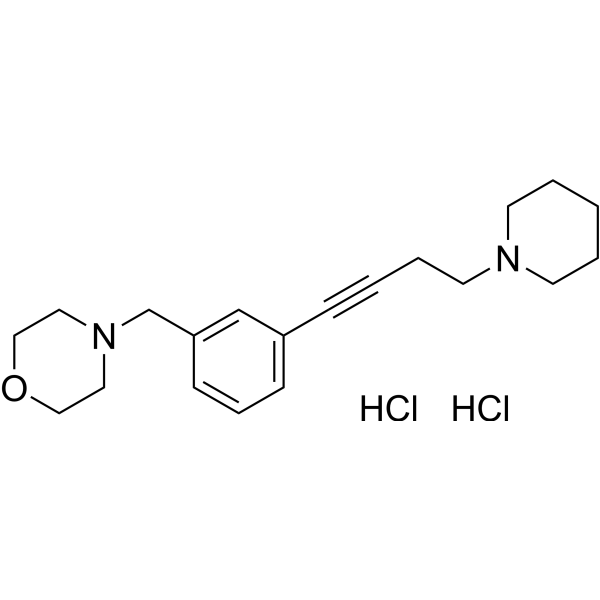 0 ImagesCat. No.: HY-107562CAS No.: 544707-20-2JNJ-10181457 is a neutral, potent, brain-penetrant and selective non-imidazole H3 antagonist which increases NE and ACh concentrations in rat frontal cortex. JNJ-10181457 can be used for neurological research.
-
MY-1250
 0 ImagesCat. No.: HY-129272CAS No.: 63768-47-8MY-1250 is a histamine release inhibitor. MY-1250 is the major active metabolite of Repirinast (HY-109544). MY-1250 stimulates adenylate cyclase to increase intracellular cyclic adenosine monophosphate levels, reduce intracellular ATP levels, inhibit antigen-induced intracellular calcium store mobilization, and induce phosphorylation of the 78 kDa protein. MY-1250 inhibits antigen- and phospholipase A2-induced release of histamine and slow-reacting substance of anaphylaxis from mast cells, lung tissue fragments and basophils. MY-1250 can be used in research related to allergic diseases and bronchial asthma.
-
Pitolisant-d5 hydrochloride
 0 ImagesCat. No.: HY-12199BSCAS No.: 2740634-42-6Synonyms: Ciproxidine-d5 hydrochloride; BF 2649-d5 hydrochloridePitolisant-d5 hydrochloride (Ciproxidine-d5 hydrochloride) is the deuterium labeled Pitolisant hydrochloride (HY-12199B). Pitolisant hydrochloride is a potent and selective nonimidazole inverse agonist at the recombinant human histamine H3 receptor (Ki=0.16 nM).
-
Ketotifen (Standard)
 0 ImagesCat. No.: HY-B0157RCAS No.: 34580-13-7Synonyms: HC 20-511 (Standard)Ketotifen (Standard) is the analytical standard of Ketotifen. This product is intended for research and analytical applications. Ketotifen (HC 20-511) is an orally active second-generation noncompetitive histamine 1 (H1) receptor blocker and mast cell stabilizer. Ketotifen can block 6-phosphogluconate dehydrogenase (PGD) in vitro. Ketotifen also has antiviral activity against SARS-CoV-2 and Influenza virus. Ketotifen can be used to the research of autoimmune encephalomyelitis (EAE) and asthma attack prevention.
-
Desloratadine-3,3,5,5-d4
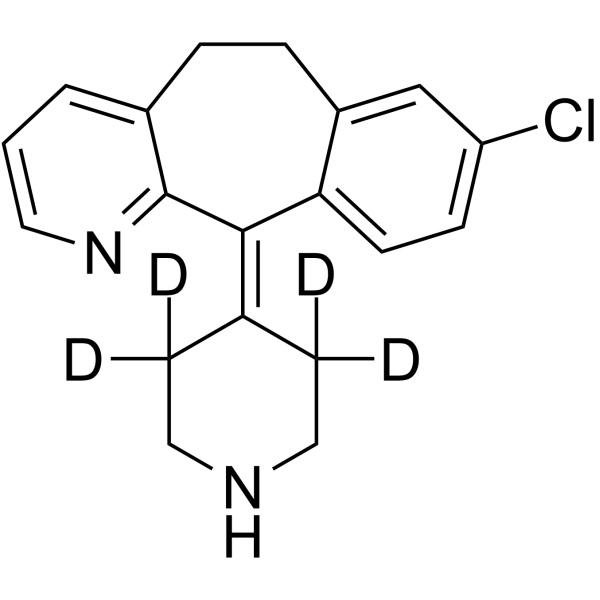 0 ImagesCat. No.: HY-B0539S2CAS No.: 2713301-38-1Desloratadine-3,3,5,5-d4 is the deuterium labeled Desloratadine. Desloratadine (Sch34117) is the orally active major metabolite of the nonsedating H1-antihistamine Loratadine. Desloratadine is a selective H1-receptor antagonist that has anti-allergic and anti-inflammatory activities[1][2].
-
Cimetidine hydrochloride (Standard)
 0 ImagesCat. No.: HY-14289ARCAS No.: 70059-30-2Synonyms: SKF-92334 hydrochloride (Standard)Cimetidine (hydrochloride) (Standard) is the analytical standard of Cimetidine (hydrochloride). This product is intended for research and analytical applications. Cimetidine (SKF-92334) hydrochloride is an orally active and inverse histamine H2 receptor antagonist with a Ki of 0.6 μM. Cimetidine hydrochloride is a gastric acid reducer, and can be used for duodenal and gastric ulcers research. Cimetidine hydrochloride has anti-cancer and anti-inflammatory activity.




